The Day I Typed “The End”

Pheidippides collapses after finishing the first marathon run. By Luc-Olivier Merson (1869)

Pheidippides collapses after finishing the first marathon run. By Luc-Olivier Merson (1869)

Typical Me:

“I started something; Typical me, typical me, typical me;  And now I’m not too sure…” ~Johnny Marr & Morrissey (From: I Started Something I Couldn’t Finish, by The Smiths)

Sure, I’d spent thirty or so years threatening to write an epic fantasy. Seemed like stuff kept getting in the way. You know: life… and stuff.  I suppose a few decades of not starting something I’d been talking about since I was twelve eventually made me reticent about it. But with some of those close to me (read: my parents), I’d gained an ill-repute. First there was the writing thing, then came the guitar lessons I quit (I got blisters on my fingers!), and there was always the bedroom I wouldn’t clean, dishes I wouldn’t rinse, and so on. It also took me six years to work my way to a Bachelor’s degree. So yeah, I took some grief about my lack of resolve in finishing things.

Untypical Me: So from the time I left college until I left the business world in ’03, I worked hard to earn a can-do reputation. From product start-ups, to sales turnarounds, to remodeling projects, to building my own house—I became Mr. Stick-To-It-Till-Done. People looking for advice on how to tackle and accomplish difficult undertakings came to me. Me! The guy who never started writing, who switched his major four times, and who never cleaned his room. It took some time, but even I started to believe it about myself.

Then I started writing. At first it was a sideline to my carpentry gig—mostly for rainy days or between projects. I figured I’d knock my story out in, oh, say six to eight months. Yeah, right. That slid by, and I was still outlining. Woo-boy—Typical Me was back. Luckily, I kept my writing mostly secret. After all, I had a reputation to uphold.

The Blind Rush Forward:

 “For me, it’s always been a process of trying to convince myself that what I’m doing in a first draft isn’t important. One way you get through the wall is by convincing yourself that it doesn’t matter.” ~ Neil Gaiman

At some point I did just as Lord Gaiman describes in the quote: I self-deluded. It would just be a story for my niece and nephew (we’d long shared a love of fantasy stories). No one else had to see it. And it began to turn around for me. I made progress, and started to have fun, inventing names and researching Goths and Romans. As my story unfolded, I became fascinated by the revelations that seemed to come from nowhere. Characters took on personalities all their own, and the story expanded in startling and yet delightful ways. Nuances I’d never dreamed of including magically appeared. I’d been kissed by the muse, and I couldn’t get enough.

I no longer worried about showing it to others. I knew it was amateurish. I didn’t care. I just wanted to get through the story. The only thing I can compare it to is getting hooked on reading a book. A big, epic, unexpectedly mind-blowing book. I couldn’t wait to pick it back up and see what would happen next. From early on I had a vague idea for how the story would end. But the things that kept me going were the ongoing surprises and unexpected twists. Ah, the life of a newbie pantser. It was a real rush!

What, Me Worry? Then one day, two to three years into my little side-project, I came to a realization. I had no idea about word counts or story arcs, but at about 200K I realized my story was getting longish. I also knew, with absolute certainty, I was only a third of the way through the main story. But I was also at a seminal moment for my two main characters. Their lives were irrevocably changed. “Hey, this could be the end of a book,” I thought. And I suddenly knew the general shape of the two remaining arcs of the overall story. “Huh. It’s a trilogy! Who knew?”

I know every writer’s journey varies. Many writers would’ve stopped there, revised, polished and submitted book one, knowing they could write the rest later. That thought worried me. It messed with my aforementioned self-delusion. I told myself, “What’s the rush? Just finish the story. No one is going to see it anyway… For now.”

A Funny Thing Happened On the Way to the Forum:

“When people come to me and say, ‘I want to be a writer. What should I do?’, I say, ‘You have to write.’ And sometimes they say, ‘I’m already doing that. What else should I do?’ I say, ‘You have to finish things.’ Because that’s where you learn from; you learn by finishing things.” ~Neil Gaiman

I blew out my shoulder in October of ’08. Don’t worry, it’s much better now. But at the time it was a fairly debilitating injury. I couldn’t even type for a month, and carpentry was out of the question for the foreseeable future. I had recently finished the second section of my story, and the final section was underway. Almost five years in, I had already changed my focus from mostly carpentry to mostly writing, but the injury was the universe’s final nudge. Time to go all-out and finish.

But that’s not the funny thing I allude to in the above subtitle. Something else was going on. My gut was telling me I might have a good story. I’d long since abandoned the idea it was for my niece and nephew. Heck, they were teenagers in high school by this time, not remotely interested. Plus it had clearly become an adult story by then.

I still tried not to allow myself to think too far ahead, but a tiny flame had been kindled in my heart. I started to believe my story could matter. I’d learned so much about myself along the way. I’d laughed and cried with my characters. I started to think that maybe it could be meaningful to others, too. I didn’t allow this hope into the front seat as I drove for the finish line, but I knew it was back there, hidden in the trunk. I wanted it to be published. I wanted to connect with others through my story.

Trudging Wrought Road: About halfway through book three, I decided to map out all of the things that needed to happen to pull all of my many story-threads back together. The story had sprawled on me, so it was going to be quite a feat. In the final few months, I knew each day what needed to happen to get me to the next step. It was a really rudimentary attempt at plotting, but it got me from day to day, week to week.

Even in writing this today, I have to remind myself that no one had read yet. My wife and sister both read the first draft, but not until it was completely done. I somehow trudged through these ‘plot steps’ I’d mapped out in a workmanlike fashion, and I marvel at my former self now. These were/are emotional scenes for me—the culmination of years of toil and systematic setup. I still laughed and cried at the appropriate points, but it was all in a day’s work. On to the next step.

And then I reached the last plot point on my list. And it was emotionally wrought. But I knew it wasn’t quite over.

Can You Say Catharsis? It needed an epilogue. I’m not even sure I knew the term then. But I knew there was one more scene. And I knew this one would be the one that got me. It did.

I remember telling my wife on our morning walk that I thought I would finish this last scene that day. But I kept it nebulous. Neither of us made too big of a deal out of it. Like the whole journey to that point, it was too uncertain.

I wrote the epilogue scene through the blur of stinging eyes. And I made a prominent point of typing the actual words. It felt so damn good typing “The End.” I wept. Do I admit that a lotJude-Law-in-the-Holiday-jude-law-5255540-399-223 in this space? I suppose like  Jude Law’s character Graham in The Holiday, “I’m a major weeper.” 

I instant messaged my wife and told her, and admitted I was crying. She messaged back: “Now I’m crying. So proud of you!”

The Beauty of The End:

“And in the end, the love you take is equal to the love you make.”  ~Lennon & McCartney (From The End, by The Beatles)

I’ve typed the words “The End” since, and aspire to many more times. But that first time was special. Neil’s right—there’s much to be learned from finishing. In many ways, typing “The End” is only the beginning. It’s the start of sharing what you’ve gained, and that’s where the real growth happens.

So in the end, typing “The End” was about more than the conclusion of my story. It wasn’t even about discipline, patience, or perseverance. I’ve learned much more about those things from the journey since.

Typing ‘the end’ was one of the most profoundly moving moments of my life. And I sometimes think it won’t be surpassed by getting an agent or a publishing deal. It was about knowing I’d found myself. It was about trusting my heart, and a willingness to reveal myself to seek human connection through story. I’ve found joy and healing, friendship and love through writing fiction. And that’s no small thing.

The Road Goes Ever On: Then, after my cathartic moment, I couldn’t resist. At the bottom of my manuscript’s word doc, I typed: (Stay tuned.). I knew my story would go on. And it will.

Now, tell me about “The End” of your story. 
Orchestrating Impact

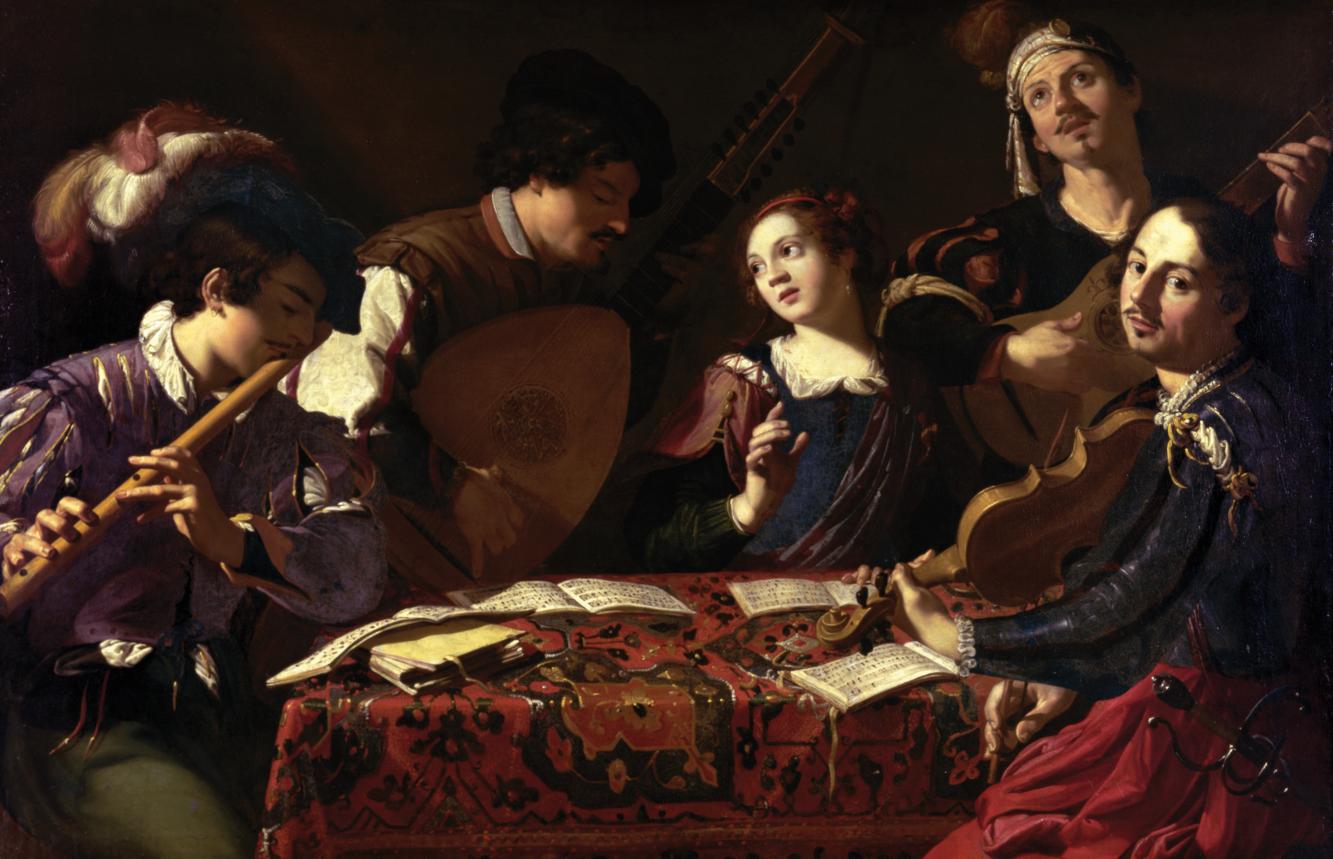
The Concert, by Theodoor RomboutsGetting Under the Shell:

“…A story is about how the plot affects the protagonist. The good news is that protagonists… live and breathe and make decisions the same way we do. The bad news is that writers often tend to leave this crucial layer out, giving us only a beautifully written rendition of the story’s external shell – the plot, the surface, the “things that happen” — rather than what’s beneath the surface, where the real meaning lies.” ~ Lisa Cron

If you are a regular reader here you probably know I’m working on another rewrite of book one of my trilogy. Thanks to some amazing feedback and guidance from some fantastic mentors and beta-readers, I’m well into the project. I knew from the start that this rewrite was about adding internal meaning to mostly external events (plot). But even with the insight I’ve gained, I need consistent reminding to dig deeper, to get under the shell and seek the “real meaning” in each scene.

The Lisa Cron quote above came from a knockout of a post on Writer Unboxed. I highly recommend taking the time to read. But if you don’t mind, please don’t go till you’re done here. It’s so thought-provoking, you might never come back. To give you an idea, in his comment on the post, Don Maass said he was unplugging his computer for a week to process what she’d written. Anyway, Lisa provoked at least a full morning of deep thought on my part… so far.

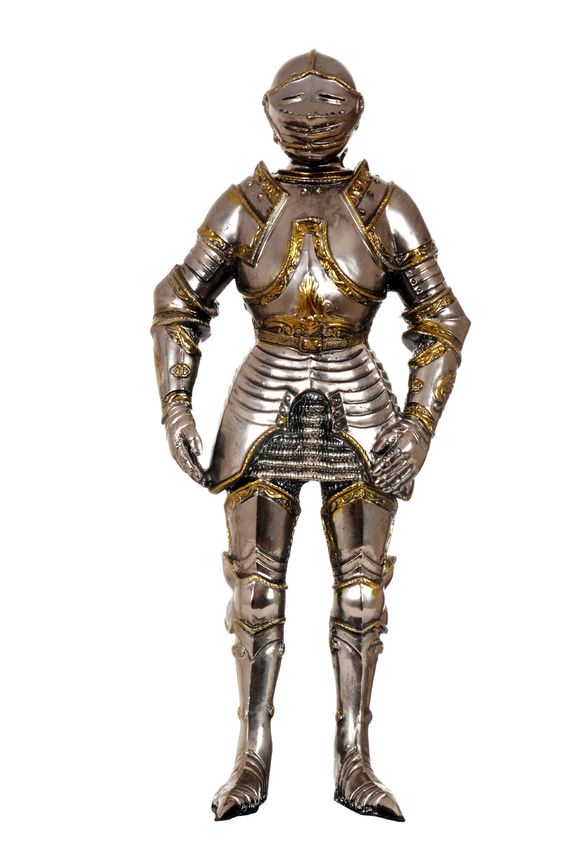
Of Bones and Flesh and Suits of Armor: About a week ago, when I first came up with the idea for this post, on a slip of paper I wrote: “Stripped to bone by revision, now addingSuit of Armor flesh back.” My first draft of this story had good bones, but it was most definitely bloated. I knew it needed to be stripped down, focused on what really propelled the story. So in my revision last fall, I mercilessly cut. The final result in its last incarnation was pretty lean and mean, fairly tightly focused on my two primary protagonists. In the process I’d sacrificed much of my characters’ introspection. This was a big portion of the so-called flesh I’d stripped away. But it was more than liposuction. I know it needed to be done. The introspection was often indulgent and disruptive, occasionally clumsy or unnecessary to the issues at hand, and/or slowing to the pace.

So the metaphor didn’t seem quite right. I don’t believe my characters were mannequins or overly archetypal, or that their goals or conflicts felt contrived. I’m confident I’ve created a unique world populated with multidimensional characters. And I’ve been told the result of my last rewrite produced a competent and polished draft. It was Lisa’s use of the word “shell” that made me think of it. My story had become a suit of armor—and a fairly well-wrought one at that. It was tailored to fit reader expectations, flexible enough to handle the action at hand, even fairly shiny, if I do say so.

But I realize now it was also built to be protective. I’d inadvertently given my story a hardened, slick outer shell, seeking to make it impervious to external attack. Critique of the story could not hurt me, because it was all about external events. Nothing could really penetrate it and get to me, because I hadn’t exposed much.

Turns out it still hurts to be told that your work is indeed slick, but that it’s also too invulnerable to be as significant as it could be. So much for armor.

Digging Deeper to Get Vulnerable:

“What gives a story high impact is that which is most personal and passionate in its author. That includes your own fears. They are your compass. They’re pointing you to what unsettles. And also to what matters.” ~Donald Maass (From Writing 21st Century Fiction)

So a few months ago, in preparation for this rewrite, seeking to gain a better grasp on all of the feedback I’ve received, I scheduled a phone conference with my mentor Cathy Yardley. We talked about how the characters were affected by the events, about how backstory informed their mindsets and thereby their actions, about doing a chart to map the goals, motivations, and conflicts (GMC) for each scene, and so forth. It would’ve been a productive session with just those things. But Cathy took it a step further.

Turns out, besides being a wonderful editor and coach, she’s a pretty damn good psychotherapist (perhaps that goes with the territory?). She gently inquired again about what originally inspired my writing and what I’d hoped to capture (something we’ve discussed before). Then, in a flash, with surgical precision, she zeroed in on my fears regarding those passions. Before I knew it, I was wiping welling tears, unable to speak without a quaver in my voice. “Right there—capture that,” she said, “and your rewrite will succeed.”

Don is right, and Cathy showed me it was so. My most personal passions twined with my deepest fears about them guided me right to what matters, and to the beating heart of my trilogy.

Seeking Symphony: Being willing to reveal more of myself is not enough (and I still struggle with just willingness). It’s easier said than done. Adding the internal layers I’ll need in order to achieve higher impact will be an intricate operation. To take it to another level, I will need the internal and external, the backstory and the unfolding action, to work in symphony, building to a crescendo of emotional significance.

I was thinking about this in regards to a documentary I saw on the making of Bridge Over Troubled Water, the milestone 1969 album by Simon and Garfunkel. I was particularly struck by the evolution of the song of the same name. Paul had written the song quickly, and turned in an acoustic version, accompanying himself on guitar. You can listen to that early version here. He’d only written the first two verses, and he envisioned it as a simple, stripped-down gospel style song. Both Art and producer Roy Halee wanted it to be longer and to have more emotional impact. They implored Paul to write a third verse to bring the themes of the song home, so to speak.

If you’re like me, you’ve heard this song a zillion times (perhaps you’re thinking one too many?). But take a minute to listen to the final version again. After Art sings the original two verses over simple piano accompaniment, the song comes to a fitting climax, and that could’ve been a satisfactory end. In my opinion, it still would’ve been a hit song. But then comes the third, added, verse:

“Sail on silver girl, Sail on by
Your time has come to shine
All your dreams are on their way
See how they shine
Oh, if you need a friend
I’m sailing right behind
Like a bridge over troubled water
I will ease your mind
…” ~Paul Simon

Now, for the first time, Paul is harmonizing with Art. The lyrics speak to a definitive sacrifice for friendship. “Your time has come to shine, All your dreams are on their way.” Then, “I’m sailing right behind.” My interpretation: things have been tough along the way, but I know good things are coming for you, and I’ll be there for you—no matter what. That’s heady stuff by itself.

But along with the theme enhancement of the added verse we are introduced to subtle bass and drum, and then strings. The instrumentation builds and builds to a symphonic crescendo paired with Garfunkel’s soaring voice. It’s wonderfully powerful. They took what would’ve been a perfectly sound song, probably a minor hit and, in my opinion, made it one for the ages. I’m willing to bet people will know that song for generations to come. All because Simon and Garfunkel were willing to dig deeper, to take it to another level.

Orchestral Manoeuvres in the Dark: Please know I am not comparing myself to Paul Simon… nor even Art Garfunkel. I am inspired by such things. But most of the time I feel like I fumbling forward in the dark, hoping I won’t be tripped on my way to “The End.” And all without a suit of armor. I know it’s still up to me to orchestrate the changes that will take this book to the next level. But thanks to my mentors and my tribe, I feel like I’ve got some moonlight to guide me. Thanks to all of you who’ve supported me. Wish me luck!

What about you? Are you polishing your suit of armor? Are you willing to dig deep and get vulnerable? Or have you heard Bridge Over Troubled Water one too many times, and couldn’t care less about having that kind of impact?

Image credit: mg7 / 123RF Stock Photo

Community Revisited – Watching the Ripples Roll (WU Redirect)

Whitecaps at Hazelhurst 143I’ve noticed that in past redirects to Writer Unboxed, I always use the term “honored,” as in: “I’m honored to be on WU.” And with good reason. It is an honor. I consider everything I do for WU to be an not just an honor for me, but good writerly karma. My writing life has been so blessed by everything this community has offered me over the years. I really do wonder if I’d still be writing if I hadn’t found WU. After I finished a first draft of the trilogy, and submitted it (way too early) to agents and editors for a unanimous rejection, I spent a few months thinking that was it. I gave the writing thing a shot, and it didn’t work out. I’m not sure if I could’ve lived with the regret, but that shrugging sort of attitude prevailed for a time. Then I discovered WU, and I discovered my journey wasn’t over, it was just beginning. I caught the WU wave that day, and I’m still riding it.

So with that in mind, allow me to say I am honored to redirect you to the source of my writerly wave, Writer Unboxed, for my article: Community Revisited, Watching the Ripples Roll.

[Photo by Vaughn Roycroft]

What Women Read (on What Women Write)

Skolani Warrior, blade over shouldersToday I have the pleasure of being a guest on my good friend Kim Bullock‘s blog, What Women Write. Kim’s a very talented writer I met through Writer Unboxed, and she and I serve together on The WU Mod Squad–the moderating team for the WU group page. Kim is a talented writer, and I’ve had the opportunity to read her manuscript and sure-to-soon-be-a-hit-book, The Oak Lovers, based on the fascinating life and times of her great-grandfather, painter Carl Ahrens. She shares contributing duties on What Women Write with five other talented writers, so being invited to post there was a bit daunting. Being a guy was just a small part of it. But, since it’s almost Independence Day here in the US, I decided to take a bit of a gamble, and write my take on what women read. I figure this time of year, even with the chance it’ll be a dud, or worse, blow up in my face, it’s worth the risk. If it flies, it could be fun to watch the fireworks.

So please join me on What Women Write, for my take on What Women Read!

Image credit: <a href=’http://www.123rf.com/photo_9780536_blonde-girl-in-the-scandinavian-suit-on-a-blue-sky-background.html’>demian1975 / 123RF Stock Photo</a>

Life’s Too Short

A Powerful Cliché: As writers we’re supposed to avoid clichés, but the title of this post happens to be a special one for me. There’s a lot of power in those three words. I’m living proof… for the moment. Allow me to explain by starting with a quote:

“Until one is committed, there is hesitancy, the chance to draw back. Concerning all acts of initiative (and creation), there is one elementary truth, the ignorance of which kills countless ideas and splendid plans: that the moment one definitely commits oneself, then Providence moves too. All sorts of things occur to help one that would never otherwise have occurred. A whole stream of events issues from the decision, raising in one’s favor all manner of unforeseen incidents and meetings and material assistance, which no man could have dreamed would have come his way. Whatever you can do, or dream you can do, begin it. Boldness has genius, power, and magic in it. Begin it now.” ~ William Hutchinson Murray

Unlike the title, that quote’s a bit long, but I still love it. I first read it in Steven Pressfield’s The War of Art in late 2003. It really resonated with me then and it’s only grown more meaningful for me since. If you’re wondering what the quote has to do with the title, I hope to show you in the next few paragraphs.

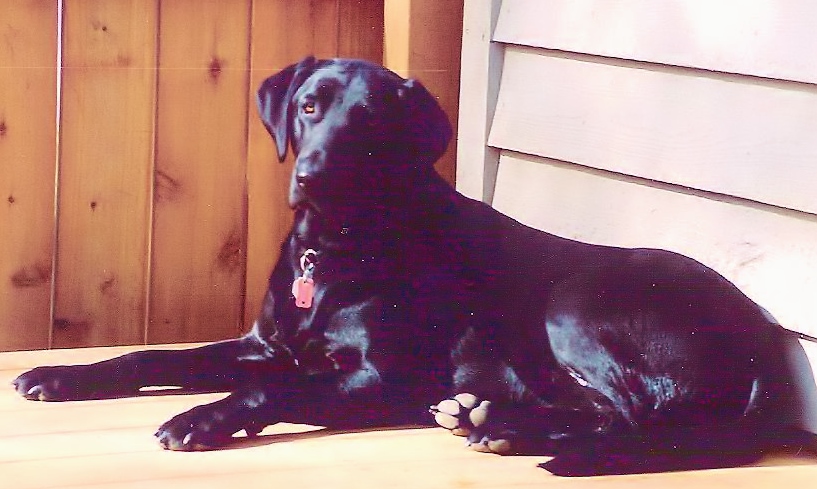
Mag Black and whiteMoment of Commitment: Over the past holiday weekend, I found myself retelling the tale of our life-change. My wife and I had been discussing the possibilities for a year or more before we committed to moving to our cottage in the woods and dedicated ourselves to living a more fulfilling life together. I’ve written about it before, but the retelling got me wondering which of the events was the one that tipped the scales and nudged us past hesitancy. I think there was one particular inciting incident, and it may sound strange to those who’ve never truly loved a pet. It was the death of our beloved Maggie, in September of ’02. Although we didn’t leave our business and move to our cottage for another year, Mag’s passing was the tipping point. More on that in a minute. For now, suffice to say it was the day my wife and I started routinely using that old clichéd phrase: Life’s too short. The more we said it, the more sense it made.

Tragic Impetus: As sad as our dog’s death was for us, it wasn’t the actual beginning of our life-change. There was an evolution of mindset. I think that evolution may have begun on September 11, 2001. Such a strange and tragic day. The earth seemed to tilt off of its axis that morning, and for so many it took a long while for it to return to spinning as it once had. I’m guessing for some, it still hasn’t fully righted itself. I don’t personally know anyone who was wounded or killed that day, but it was a definite mindset shift. I won’t trouble you to explain the details, as we each have our own personal version of it.

A Movie? Really? Shortly after that mindset shift came the next in a series of life-altering moments. Again, it may seem trivial for those who don’t share my lifelong ardor. This next moment came in the form of the release of a movie. Yep, a movie. And a movie based on a fantasy story, at that.

On December 19, 2001, The Lord of the Rings: The Fellowship of the Ring debuted in theaters across the U.S. My brother-in-law and I went to the film’s first showing on Saturday the 20th. Beforehand I’d been skeptical. But I held a hope that the film would recapture my first favorite book. I remember sitting in the theater. The opening was a female narrator reading backstory. I still wasn’t convinced (although the footage of elves and men fighting orcs on the plains of Gorgoroth was pretty cool). But when the actual opening scene began, a panoramic view of the Shire, I was instantly spellbound. I whispered to my bro-in-law, “Does it look as good as you hoped?” He leaned over. “No,” he whispered. I turned and raised a brow. “It’s even better,” he added. We were grinning like idiots by the time Gandalf made his appearance.

So how was the release of Fellowship so life-altering? It reminded me of my former self. It reawakened the boy who had wanted so fervently to connect with story that he dared to imagine himself as the storyteller. I went home and immediately dug out my old box-set of LOTR and started reading. It was the first fiction I’d read in many years. I instantly fell back under the spell of well-told story.

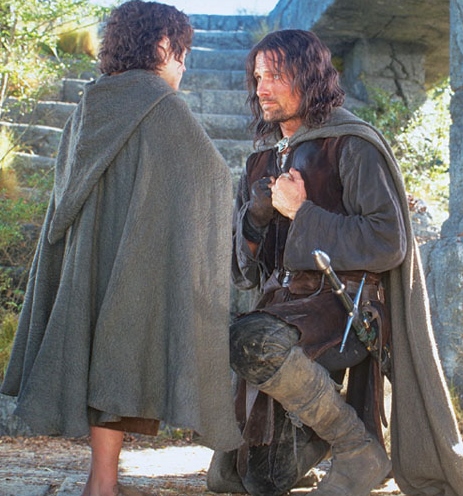
Regained Perspective: Rereading LOTR helped me to make sense of a world that didn’t seem to make sense anymore. It reminded me of the real meaning of friendship and loyalty, of Frodo_Aragornthe importance of finding one’s own definition of honor in the face of death. For the sake of employment, I lived in a place I did not love, devoting much of my time and energy to earning a secure financial status. The Lord of the Rings reminded me of the significance of beauty and the exploration of emotions. It reminded me to appreciate a shared love. And of what the true ideal of home meant to me.

Canine Life-lessons: I mentioned the death of our Maggie earlier. When the day came, I was almost a year into the reawakening of my former self through rediscovering fiction. Saying goodbye to our girl was one of the most difficult and moving moments of my life. My wife and I both immediately knew things would never be the same afterward. She left us on a sunny autumn Friday morning. We couldn’t face going to work, so we drove to our cottage in Michigan, still in shock. When we arrived, before we even got out of the car, we were reminiscing about how excited Mag would get on the days we came to Michigan. She had known even before us—this was home. This was where we belonged.

Maggie had been with us through most of our successes in business. The presence of her spirit in our lives had been such a blessing—vital to our wellbeing during difficult years of hard work. But her life was over, and it had seemed so damn fleeting. Looking back on them, those years had been a blur. Because of her, we knew. None of the rest of it mattered. We belonged at home, exploring what really mattered, and finding it together.

Maggie taught us the true meaning of the words: Life’s too short.

Providence Moves: It was a bold step, leaving a lucrative business and moving to a cottage. But every step since we committed ourselves has been providential. In other words: “A whole stream of events issues from the decision, raising in one’s favor all manner of unforeseen incidents and meetings and material assistance, which no man could have dreamed would have come his way.”

The move home led to much more reading, including Steven Pressfield’s Gates of Fire. Which led me to his website, which led me to The War of Art, which led me to the above quote as well as this one: “Are you a born writer?… In the end the question can only be answered by action. Do it or don’t do it.” Which led to me scribbling the beginnings of a story in a notebook while I waited at a jobsite for the concrete subcontractor, about a Gothic boy who was a scion and the warrior-girl who was secretly his guardian.

The Providential Road Goes Ever On: From a tentative beginning, and through a mostly secret drafting of my trilogy, I was led to exploration of the craft and business of fiction. Which led to Writer Unboxed. Which led me to finding myself as a writer—and thereby as a person. As well as all manner of unforeseen incidents and meetings. Including some of the most wonderful and meaningful friendships of my life.

Mag on PinehurstSo those three words, life’s too short, the real wisdom of which was only learned because we gave our hearts to a dog, has led to all manner of insight and opportunities, the likes of which I could never have dreamed would come my way. So thanks, Mag.

What about you? Have you committed to a bold step? If so, has Providence moved for you, too? 

[Black and white photo of Maggie by Mike Lanka, of Lanka Photo]

Re-Revision: Getting Messy

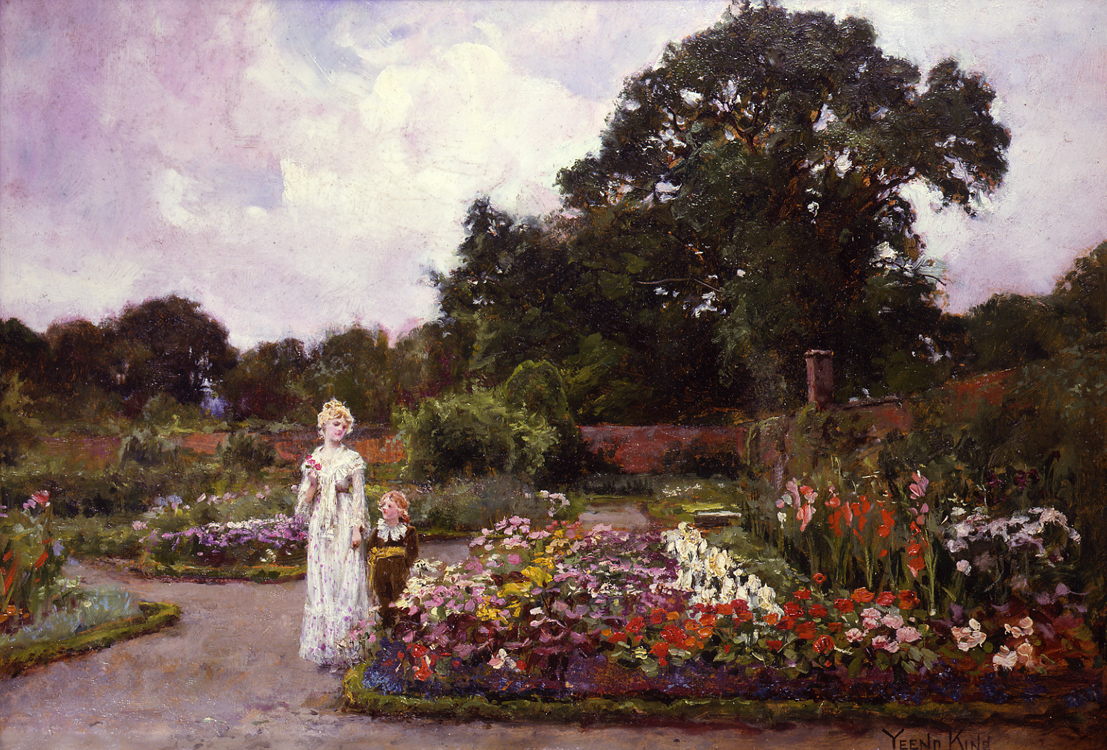
Henry John Yeend King, Victorian_gardenDon’t Tell Me: I’ve had my fingers crossed so long they ache. Do you know the feeling? Have you ever waited for feedback or through revisions, hoping against hope that this time was the charm? Anticipation rides high for a while. But time slides by and something changes. During the latter days of those fingers-crossed, hoping-against-hope waiting periods, I often begin to imagine the worst. They think it sucks. They weren’t drawn in. They can’t even force their way through my swamp of awful words. At some point a reversal occurs. I actually start to dread what I might hear.

Yet Again: So now I’ve actually heard, and lived to tell. I received some high-level critique of book one of my historical fantasy trilogy, The Bonds of Blood. There’s a lot to take in. Don’t get me wrong, much of it was good. I’ve been here before. I know I may be down, but I’m not out. And most of the advice I received this go-around rings true in my gut. Which means I am headed into revision…Yet again.

It’s not hugely shocking for me. But I must admit I’m disappointed. Of course after each round of revision, you hope your manuscript is finally ready. But even as I sent it out, deep down I had a feeling it wasn’t quite the book it could be. And it’s exciting to hear how close it is to ready, from several trusted sources.

The Labor Behind the Plot: I’m no gardener. But my dad was. My mom, too. When I was a boy, our family’s half-acre plot of land was lined with pristine garden beds, and there was always something in bloom. My mom had a real touch for it. In the early sixties, her gardens were featured in House & Garden Magazine. Neighbors would come and admire the gardens, as would passersby. My siblings and I were very proud of them, and her.

In the backyard my dad had a two huge vegetable patches. And he kept a compost pile. In the fall my dad would spread the compost accumulation and the lawn clippings over the vegetable patch. Then in the spring, he would turn the whole thing. By hand. With a spade. It took him a week or more, all in his spare time—evenings after work and weekends. But, boy, were his tomatoes wonderful! The soil in that patch of garden was greasy-black and rich. Everything grew well there—cucumbers, squash, radishes, peppers, carrots. It was all delicious stuff.

Our house was a simple, middle-class, three-bedroom ranch. But that simple little house was situated on a pristinely tended plot. And, having seen my parents toiling, having been put to work weeding, mowing, sweeping, and shoveling snow through my childhood, I knew that well-tended look, that riot of blooms, and those juicy tomatoes came at a price.

Digging Deeper: As I said, I’m no gardener. Maybe it was all those days weeding and mowing rather than riding my bike or playing baseball, but I don’t enjoy the act of gardening. I do enjoy having a nice garden and grounds. And now that I have my own house, I’m willing to put in the necessary level of labor to achieve a modestly attractive landscape.Karen's flowers (Photo by Karen Halsted)

As I was tidying our yard today, I was contemplating my upcoming revision. As I weeded and trimmed last year’s dead growth from our modest gardens, I realized a few things. Our gardens are never going to garner attention and admiration. We’ll never grow the kind of tomatoes that make people light up when we dole out the extras. Our yard and gardens are tidy, but nothing special. If we really ever want to make them special, it would take some serious commitment to hard work. It would have to start with the soil. We’d have to remove the surface mulch and replant everything. We’d have to dig deep, add nutrient-rich compost and manure and peat. And turn it. By hand. With a spade. For days. Like my dad used to do it.

My Pristine Garden: I may have work to do on my manuscript, and it is far from perfect, but one thing noted by most who’ve read it: it’s clean. I’ve worked at making it tidy. I’m not saying it’s masterfully written, but there are very few mistakes. The paragraphs and scene breaks work well. The POV changes flow smoothly. Mechanically, it’s fairly well-tuned, by most accounts. I’ve weeded my typos, and carefully trimmed and edged the breaks. The pathway through is smoothly groomed.

And, much like my yard, it’s very nice—but not as special as it could be if I did some diligent work and deeper digging.

Getting Messy: The most daunting part of returning to revision is knowing how messy it will be. If I dig in like I need to, all of my work to make it pristine will go by the wayside. Rewritten scenes will have clunky sentences and typos. And the scene changes may not be smooth. It will take more feedback to be sure readers aren’t accidentally tripped up on my new pathway through the garden of my manuscript.

But I realize it must be done. And my work this year may not yield ripe fruit and gorgeous blooms before the season’s changing. Another summer of my journey may pass. But if I am willing to get messy, and to be diligent, the growth in seasons to come will inspire the impact and results I seek—the response from readers that I know my story has the potential to inspire.

Pristine is not memorable or moving. Unlike my yard, I believe my story is worthy of being memorable and moving. Unlike my yard, there is no choice. I owe it to my muse and to everyone who’s supported me to get this far. I’m ready to roll up my sleeves and take up my spade.

It’s time to get messy.

How about you? Ever had aching crossed fingers? Are you willing to dig into your pristine garden and get messy? 

Ambushed by Theme

“Starting with thematic concerns is a recipe for bad fiction. Good fiction always begins with story and progresses to theme; it almost never begins with theme and progresses to story…  But once your basic story is on paper, you need to think about what it means and enrich your following drafts with your conclusions. To do less is to rob your work (and eventually your readers) of the vision that makes each tale you write uniquely your own.” ~Stephen King (from On Writing)

A Slave Market in Rome, Jean-Leon GeromeIt’s Just a Simple Story: That’s what I kept telling myself and others while I worked on what became my epic fantasy trilogy. I started with a young man who is an heir to his clan’s chieftainship, and a young warrior-woman assigned to be his guardian. I kept reminding myself I was just telling their simple story, through the next six or so years and six hundred plus thousand words of prose. Um, yeah, it sort of spiraled on me.

But I honestly always considered the story simple, and rooted in the characters. I only stopped when I felt I’d told their story. Only in hindsight can I see the themes that arose in the telling. And, in the spirit of the trilogy’s epic length and breadth, quite a few themes did indeed arise. I suppose the most central and overarching one would be the importance of embracing one’s own freewill over an externally imposed fate, as I explored here.

“I write because I don’t know what I think until I read what I say.” ~ Flannery O’Connor

Reading back over the trilogy and thinking long and hard about what was bestowed upon me in the process, I’ve come to realize I’ve been ambushed by my muse. I set out with no intentions of addressing thematic concerns or to make any statements on societal issues. But no few such issues and concerns arose in spite of my intentions. In hindsight I see: racism, sexism, militarism, the imposition of religious dogma, obligation to family, and duty to community versus self-determination, to name a few. As an example of one of the totally unanticipated issues that my muse sprang on me, I give you slavery.

Muse-Induced Enthrallment: When I set out, I knew the ancient Roman Empire would play a substantialKirk Douglas as Spartacus role in the story. And I was also aware that Romans kept slaves. I mean, I have seen Spartacus. But I hadn’t thought too much more about it.

Very early in the plotting phase of my trilogy, I was looking for a reason for my protagonist’s father’s clan members and followers to have been kept completely separated from him through his childhood. An idea struck me: they had been defeated by the Romans, and were enslaved, as the conquered often were. It seemed so natural. Such a simple little layer to my simple little story. Oh, you sly muse. But, slave to her will that I am, I shrugged and added it to the storyline.

Little did I know that by book three, I would be featuring the POV of a Germanic slave-boy. Or that I would have a former slave reevaluating everything about his goals and motivations after seeing the slaves beneath him in a new light. Or that I would feature a highborn Roman, utterly accustomed to being constantly surrounded by slaves, come to question slavery because of newfound emotions instilled by a new slave in her service. By the end of the trilogy, the story is heavily entangled in the issue of slavery.

History’s Dirty Little Secret: Although it’s not really a secret if you look at the record, slavery was little more than a footnote in my school history lessons on, “The light of the A Roman Slave Market, by Jean-Leon Gerome (1884)western world,” as St. Jerome called the empire. By the time slavery reached its peak in the fourth century, slaves made up one third of the empire’s population, and over 40% of the city of Rome itself. Keep in mind, at this time Rome’s population was around one million (that’s 400,000 slaves, for those who haven’t had enough coffee to do the math).

Regarding the Goths, the subjects of my story, I’ve seen estimates of as many as 40,000 Gothic slaves being held in the Roman homeland by the start of the fifth century. Keep in mind, Constantine changed the official religion of the empire to Christianity in 313, and the Goth Ulfilas translated the Bible into Gothic and successfully converted the majority of Goths to Arian Christianity in the mid-300s. By the year 400, these were, for the most part, Christians keeping Christians as chattel.

“Beautiful writing is more than pretty prose. It creates resonance in readers’ minds with parallels, reversals, and symbols. It conjures a story world that is unique, highly detailed, and brought alive by the characters who dwell there. It offers moments of breath-catching surprise, heart-gripping insight, revelation, and self-understanding. It engages the reader’s mind with an urgent point, which we might call theme.” ~ Donald Maass (from Writing 21st Century Fiction)

Muse Gift: So although I say my muse ambushed me with themes, I consider her little surprises wonderful gifts. Slavery is one of the oldest and greatest crimes against humanity. It hadn’t been on my radar at the onset, but it became a prominent element in the goals, motivations, and conflicts of several of my major characters.

Although I do not lay claim to having achieved the “beautiful writing” Don refers to above, I aspire to it. Slavery became a vehicle to explore intense human emotions, such as shame, humiliation, elitism, compassion, love, hate, and vengefulness, to name a few. I’ve now viewed anew the destructive and subversive power of slavery, not just for the slaves, but for the slaveholders, and the slave-dependent society. As a theme, it offers detail, depth, and complexity to my story world.

Whether or not you believe they are muse bestowed, I know that seeking out and pondering the themes and symbols that arose in the process of storytelling continues to move me closer to achieving that depth of engagement with readers in Don’s quote. As a side-benefit, I continue to learn a lot about myself and what I think in the process. That’s a thematic win.

What surprises have you found in your work? Have you been ambushed by theme? How does it enrich your story? 

Writing To That Spooky Feeling

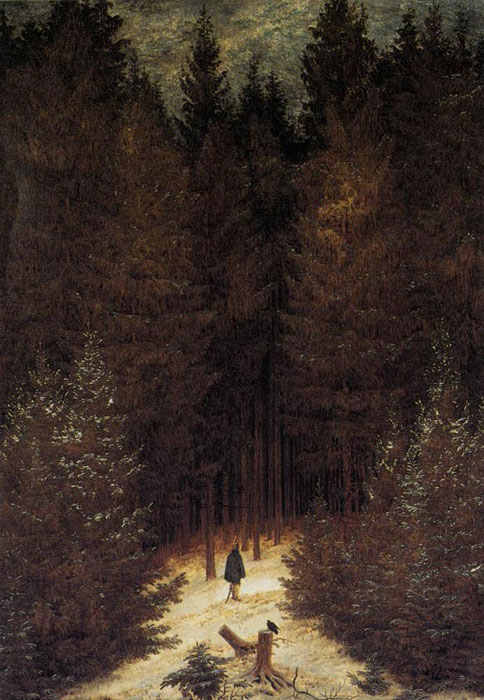
Forest Wanderer by Caspar David FriedrichDéjà Vu All Over Again: I had one of those spooky feelings about my work last weekend. I’m sure you writers have experienced something similar, or at least I hope you have. I’ve had several versions of it. I have found myself able to perfectly picture places I’ve never been. I have felt I was in the skin of characters I’ve never met or seen anywhere else. I’ve wondered where story elements came from even as my fingers tapped them out.

It’s been one of the most amazing parts of my writing journey. And even though I have written outlines in the past, and plan on continuing to explore better and more efficient ways to plot and outline in future works, I hope I never stop having spooky epiphanies and instances of literary déjà vu.

Whapped By My Muse: In this past weekend’s instance, I suddenly knew something about my historical fantasy series. I have four finished manuscripts—a trilogy and its prequel. At the end of the trilogy is a built-in spring-board to move the story forward. And I’d always had ideas, nearly a notebook full of them, for the day when I can actually continue the story. My spooky feeling this weekend came when I was noodling and writing my weekly facebook history post about a small group of actual historical figures—Goths and Romans. I started a sentence: “Although none of my characters is specifically based on…” And I got stuck. I stood up, stretched and went for more coffee to work out the rest. I poured the coffee and stood staring out the window, and said aloud to myself, “It’s almost as if the trilogy was about their parents’ generation.”

And voilà. My wheels were spinning so fast, I could hardly get the surge of ideas down on paper. It was as if my muse had whapped me upside my head and was standing there with her arms crossed, nodding in satisfaction, but saying to herself, “It’s about time you got it!” If I can pull this off, it’s going to be as if all four of my manuscripts had been specifically designed to lead into this exact series of events. The stars had aligned, as if it was always meant to be—as if by magic.

Channeling Ancient Terror & Tumult: I said that the spooky feeling is one of the most amazing parts of my writing journey. And my writing journey has been the most amazing of my life. Of course the emotions that surface are not always happy. But the emotions found are my own, and therefore an important part of my journey toward self-knowledge and personal growth. Even the sadness and grief I’ve found in fiction are cathartic. They help me to recognize and order my emotions, as well as to release those that are buried or bound up inside.

The tragic events in Boston this week remind me of my most profoundly haunting and emotional writing experience. It occurred during the writing of book three of my trilogy. Beforehand I’d read an account of a historical atrocity, and I immediately recognized it as a part of the motivation and mindset for my characters’ actions. The account was brief and very prosaic—maybe three paragraphs.

Reading about the atrocity hadn’t particularly moved me. It was just another terrible, cruel thing one group of people had done to another; history is rife with such behavior. But I knew it belonged in my story. When it came time to write the scene, a funny thing happened. Now I knew the characters involved. I knew it meant death for a few and immense pain for many others. I put it off… for weeks.

The day came when I could put it off no longer. I steeled myself and sat to write. The scene poured out of me as if from a broken dam. It came out fully formed, and has required almost no revision since. The moment I finished typing the final, tragic sentence, I leapt to my feet. I walked laps around my house, unable to draw a satisfying breath, tears streaming down my face. I finally threw on a coat and walked to my bench on the beach. I sat and sobbed. Until my black lab, Belle, could stand my odd behavior no longer, and nudged me to play Frisbee with her, as if to remind me that life goes on. She has a way of doing that.

Immortal Feelings: But the experience serves to remind me of the importance of fiction. Terrible events are marginalized by time and distance. Atrocities become history, which becomes prosaic. Until we are brought to the proper perspective. Writers offer that perspective. They say we write to be immortal. They say we write to make sense of the world and to seek ourselves. I think there is truth to those things. But my experience makes me wonder if we write to make sure that events remain immortal as well. And not just to make sure the events are unforgotten, but that the feelings evoked live on, as well. History cannot be allowed to become prosaic. Atrocities should never become statistics, and cruelty should never be a footnote.

Mystical Connection or Cognitive Complexity? I’m still not sure if my connection to the atrocity was somehow mystical, or if I was simply releasing my own pent up, Caspar_David_Friedrich_Cemetery_at_Dusk (1825)subconscious grief. But I know it was a significant moment in my life. Whether my work is published, or whether another soul ever reads it or feels even a fraction of what I felt, it is significant. And I’m grateful.

In my first interview ever, here, interviewer extraordinaire Lara Schiffbauer asked, “Do you believe in everyday magic?”

My answer then applies here: “In a recent discussion about the mystical versus the scientific in regard to writers having a muse, I weighed in on the side of the mystical. I believe there is so much more going on than can be easily explained. Those on the other side claim that the seemingly amazing story elements that occur as if from nowhere are just a byproduct of our brain’s complexity—the result of accessing our cognitive subconscious. Even if the science proponents are right, it’s still pretty damn magical to me. Even if I’m self-deluding, why would I want to live in a world without magic?”

I still stand by my answer, even if I’m still self-deluding.

Have you written to the spooky feeling? Do you think it’s mystical or cognitive complexity? Or does it matter? Would you rather just join me in potential self-deluding than consider it? 

Backstory—Fiction’s Foundation

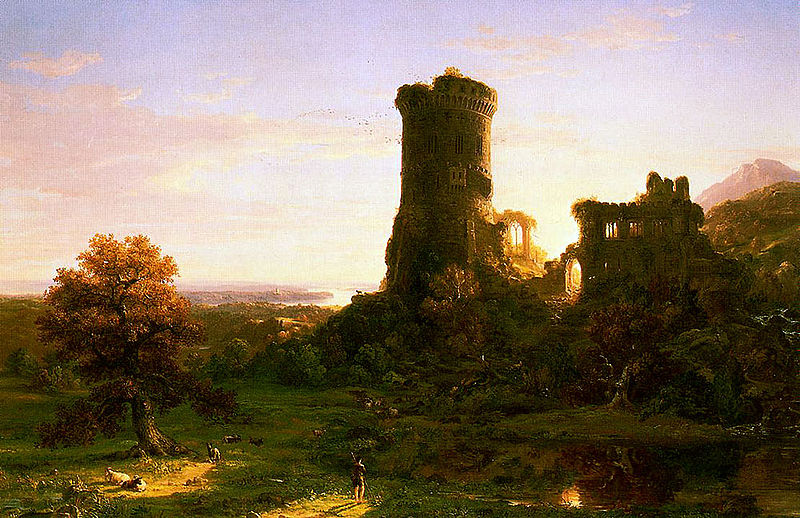
The Present, by Thomas Cole (1838)Ignorasphere: Know where it is? Trust me, if you’re trying to give life to a story, it’s not a good place to dwell. Your story won’t be able to breathe well there.

Very early in the process of outlining the story for my historical fantasy trilogy, I ran into a problem. I tried to ignore it, but turns out I couldn’t. I set out to write a story about a young man struggling to cope with his destiny, and a young warrior-woman assigned to be his guardian. But I kept tripping over the fact that his destiny, and the reasons for her assignation, were rooted in what had already happened. They were a product of their world, and its past. I kept telling myself it was simple stuff, which had to do with his father. I wanted to simply move ahead with the story, so I wrote side-notes like: “His father was a rogue chieftain—a raider who conquered a nearby port city.” And to fit the story as I progressed, I would add things like: “His father married his mother purely for political gain.” And, “His father’s followers are still living in the conquered city, and my protagonist has had no contact with them.” And so on. All in an effort to move on.

But notes like these only led to more questions, such as: Why was he a ‘rogue’ chieftain? Why was he raiding? Who originally lived in the port city? What would impede contact between the chieftain’s followers and the son? And on and on. The story just would not properly unfold without knowing more. It couldn’t breathe in the ignorasphere.

Turns out I couldn’t ignore the past.

Fomenting Forefathers: My muse demanded answers. So I started working backward. I named the father (as I explain here, I always start with the names). And I dug into researching my world, and began the process of world-building (which I’ve written about here). Fortunately, I’d already decided that I wanted to base my story in the world of the Germanic Tribe of the Goths during the fall of the Roman Empire. Since the Goths had two ruling clans, and basically split into two subgroups (the Visigoths and the Ostrogoths) during this era, I decided my MC’s father could’ve been the catalyst figure for the coming of this fracture. The son then quickly became ‘he who was born of both ruling clans.’ Of course prophesies are often wrapped around such figures, right? Wheels were spinning now. It was destiny! (Sorry, got carried away there, but such thoughts are good fodder for characters who believe in fate, right?)

Excavate and Lay the Footings First: Forgive the metaphor, but I’m a builder as well as a writer. And I knew I wanted to build something substantial with my story ideas. Every builder knows that to build something solid and lasting, you start with sound footings laid on good groundwork. The process of prepping the groundwork and laying the footings for my trilogy took about a year. I started with research and note-taking, and then named the people and places and drew my maps. Only then could I start laying the foundation, block by block. The backstory foundation took about another year, outlining and writing snippets of prose, often finding problems and going back to insert new elements or correct existing ones. And even though I knew these early blocks would be below the surface, they still had to be level and true. Only after I had a solid foundation could I begin to build my story.

World Without Beginning: You might be wondering how far back one must delve. I suppose it depends on the story. It might only require knowing a protagonist’s childhood. For my purposes, I went back and hashed out my protagonists’ parents’ generation, and their doings and deeds. Much later, after I finished a draft of my trilogy, and while I was going through a first round of submissions, I decided to start another project. I was really interested in further exploring the backstory, particularly the story of the father of the trilogy’s protagonist. How did he become a rouge raider? Sort of like how George Lucas Anakin Darth morphwent back to explore Darth Vader, but without any annoying Gungans or (hopefully) any wooden dialog.

Know what I found out? That’s right—I had to dig back even further. Turns out my protagonist’s grandfather had a sketchy past. There was a love-triangle, an accidental death, accusations of murder. Yep, the angst between my Goth’s two ruling clans has a long, tangled, and bloody history. Just goes to show, no story can exist in the ignorasphere. I’m glad I did it, as I feel it only added richness and depth to subsequent revision work on the trilogy.

What’s It Worth? Besides freeing your work from the ignorasphere, allowing it to breathe and grow, there are a lot of other advantages to a thorough exploration of backstory. For example:

*Enhanced Ambiance—For me, writing epic historical fantasy, I was interested in creating a legendary feel for the world of my story. Careful placement of historical tidbits throughout not only added shading, but color and mood to my story. For other genres and types of stories, backstory might add another ambiance, such as one of technological advancement for science fiction, or desolate isolation for a dystopian.

*Instinctual Context—If you know your world and its past inside and out, you more instinctively sense how your characters will react to situations. This is something WU contributor Lisa Cron refers to as avoiding character amnesia in a great post here. Having an understanding of each character’s beliefs and cultural mores gives you a firmer grasp on their internal and external motivations. Knowing the context of the conflicts, from all angles, gives your scenes a natural tendency toward authenticity.

*Elevated Stakes—A comprehensive exploration of backstory often reveals an enhancement of the stakes. Your protagonists have immediate conflicts, but these may impinge upon the larger picture in ways that raise the stakes. For example, my two Gothic clans are in conflict, which affects my protagonist in an immediate way. But by knowing the backstory I realized the bigger picture, that the Goths faced annihilation at the hands of a looming Roman military behemoth. If my protagonist fails to solve this inter-clan conflict, his people may face enslavement or extinction.

*Bigness—The concept is from a Donald Maass WU post, here. And I believe knowing the backstory gives you a leg up on achieving it. In the post, Don says, “In big fiction the main protagonist generally has several big things going on (plot layers, in my terminology), and a couple of minor problems too. One or more of the major POV characters also is on a personal journey. Think of this as an emotional sub-plot, such as a wound that needs healing. This inner need can generate as much plot as external problems.” Several of my secondary characters’ personal journeys came to light through backstory exploration. I also gleaned much of the nature of my protagonist’s inner journey, as well as the motivations and goals of my antagonists, through that exploration. If I achieved any level of bigness at all, it came largely through grasp of backstory.

IcebergIceberg Warning: A writing friend told me about Hemingway’s Iceberg Theory–the analogy of backstory being like an iceberg, with only the tip visible from the surface. In other words, you can’t show it all to the reader. I like that, but perhaps my iceberg would be magically levitating as the reader progresses, with more and more readily apparent as they go. Much of what you discover and know may never break the surface, but it will have given your story buoyancy nonetheless.

I believe backstory will give your story context, complexity, and authenticity, making it a richer and more deeply involving experience for your readers. But care must be taken. Reveal backstory only as it becomes necessary. Lay the proper foundation, but always keep your story front and center. Stay out of the ignorasphere. Use backstory to shade and add nuance to your characters’ goals, motivations, and conflicts.

Whether you’re building an epic trilogy like me, or a contemporary standalone, through the thorough grasp and judicious use of backstory, we can build a substantial story and strive for Bigness.

How do you chart backstory? Have you ever experienced epiphanies or story enhancements through exploring backstory? Do tell. 

Image credit: <a href=’http://www.123rf.com/photo_14533949_iceberg-floating-in-blue-ocean-global-warming-concept.html’>anterovium / 123RF Stock Photo</a>

Destiny Calling

11097070_m“Don’t believe the adverts, Don’t believe the experts, Everyone will sell our souls;
Get a little wiser,
Get a little humble, Now we know that we don’t know;
Tell us when our time’s up,
Show us how to die well, Show us how to let it all go;
Here we come, This is our destiny calling…”~Timothy Booth, James Glennie, David John (from the song Destiny Calling, by James)

An Age-Old Question: A recent thread on facebook inspired this post. It was a long and thoughtful discussion among friends, delving the depths of a deep and fairly personal topic: predestination versus freewill. Not bad for facebook, huh? A bit more provoking and inspiring than your typical Grumpy Cat meme.

I’m not sure anything was resolved. Everyone has their own feelings on the subject, and the answers for each of us are rooted in our own brand of spirituality (or, in some cases, a resolute lack thereof). But it reminded me how much of my work is tied up in the issue. You see, I’ve looked at destiny from a lot of angles—to the tune of four long manuscripts.

Bringer of Urrinan:  

The Priestess Amaseila came to offer him blessing. She held her hands out to him. Upon his touch she gasped and convulsed, eyes wide and knees buckling. Vahldan tried to pull his hands away to help her keep her feet, but she clung to him, even as she slumped and grimaced.

The onlookers stirred and murmured, but none dared intervene. Her haunting gaze never left him, but she finally regained herself and straightened. “It is you,” she breathed, as if recognition dawned. Her voice rose, “You are the bringer. You will wreak great pain upon our people. But also will you bring glory, and great joy. What is to come through you will change us all— Gottari and Skolani alike—forever. You shall be the start of it. For upon your doom, the Urrinan shall ride.”~From The Severing Son (Prequel to The Legacy of Broken Oaths Trilogy by Yours Truly)

Destiny’s Child: And so it begins. Not just for Vahldan, but for his progeny, for generations to come. In keeping with the real world, I sought to include religious and cultural dogma and superstition in how my characters perceive destiny. I do not ask my readers to believe that the Priestess Amaseila has any prophetic abilities or that Vahldan is actually doomed, or that his progeny will bring about the Urrinan (a prophesied cataclysmic change in the imperial world). In fact, I hope I’ve left readers free to deduce that Amaseila, as well as her equally outspoken daughter Amaga, are: actually in touch with the divine, lucky guessers, clever enough to manipulate those who think them prophetic, completely delusional, or some combination of the above.

“There is a divinity that shapes our ends; Rough hew them how we will.” ~William Shakespeare

External Impact: It wasn’t the prophesy of the Urrinan or Vahldan’s destiny that particularly interested me. No, what I chose to explore was how our views about our own destiny are shaped externally, primarily by the social imposition of beliefs and the expectations of others in our lives. Time and again, my characters are forced to make choices based on their belief in a destiny imposed upon them. Over the course of the trilogy, they are faced with coming to terms with the concept of fate. They must choose whether to embrace a predetermined vision that had been laid before them, or to hew a path toward their own version of destiny by staying true to themselves. Of course, whatever they choose, there are consequences to face.

“What we call our destiny is inside us. It is truly our character and that character can be altered. The knowledge that we are responsible for our actions and attitudes does not need to be discouraging, because it means we are free to change our destiny.” ~Anaïs Nin

Hewing a New Course: You might be wondering what all of this has to do with writing, besides the thematic exploration of my four manuscripts. For me it has everything to do with it. There is no question that, like my MCs, I have been motivated by expectations. Even my expectations for myself were long shaped by external forces. Based in some measure upon the expectations of others—parents, teachers, community, society at large—I selected a curriculum in school, went to college, selected my major, sought employment, pursued business success. Our perceptions of our destiny can be powerfully shaped by the external.

And yet, in my heart I kindled a hope and a belief that writing was my calling. It certainly wasn’t a part of my parents’ vision for my destiny. Grandchildren and a nice house in the suburbs, yes. A cottage in the woods, pouring myself onto the pages of lengthy fantasy manuscripts, not so much. My mom has adjusted to it. And I’m sure my dad would’ve been proud that I followed my heart. But it certainly wasn’t what they had envisioned.

 “You are what your deep, driving desire is.

As your desire is, so is your will. 

As your will is, so is your deed.

As your deed is, so is your destiny.”

~from the Brihadaranyaka Upanishad IV, 4.5

Fortune Favors the Brave: Perhaps you’re also wondering what I came away with, after nine-plus years and 600,000 plus words worth of literary exploration of the topic of destiny. I suppose you’ve surmised I don’t put much credence in predestination. But to Nin’s point, I do believe we are each imbued with the elements of character. Whether it is an innate gift or a nurtured one, it’s there. Whether it is through our legacy—the expectations and lessons of those who love us in our formative years—or the complete lack thereof, leaving us a clean slate to create ourselves, our destiny is inside us. As Nin points out, our character can be altered. Indeed, I believe it is incumbent upon us to seek ourselves in our deep, driving desire. But only in seeking for that inner calling can we find the will to hew a course toward it. And only through the day to day deeds of hewing that course can we find our true destiny.

My writing journey has been the most rewarding of my life thus far. It can be scary, deviating from what had seemed a fated existence. But my journey has taught me that destiny rewards courage. It takes courage, and sometimes great sacrifice, to embrace our true calling, and to choose to strive toward it, whatever the obstacles. Of course there will be consequences—calvin & hobbessome for boon and some for burden. But even the burdens can be easily borne by those who stay true to their heart’s compass for destiny.

Calvin or Hobbes? I wouldn’t dare invite a debate on predetermination versus freewill in the comments. It might be safer to ask you if you prefer the cartoon kid or his tiger. But I’d love to hear your thoughts on destiny. Is writing your deep, driving desire? Are you up for the challenge of hewing your own course?

Image credit:<a href=’http://www.123rf.com/photo_11097070_idyllic-and-peaceful-forest-track-at-spring-time.html’>prill / 123RF Stock Photo</a>