SPFBOX Review #6—SMOKER ON THE PORCH, by Dom Watson

I’ve been selected by Philip Chase (aka YouTube’s Dr. Fantasy) to be a member of his judging team for the 10th annual edition of the Self-Published Fantasy Blog-Off, a contest created by author Mark Lawrence. I have been assigned six titles and will be publishing my reviews for the books here, a process that will culminate in the selection of the title I will advance in the competition. Each of the other members of Philip’s team will also be making a selection, and from those Philip will select our team’s finalist later this fall.

To make my selection I will be using a ten point system similar to the one Philp has been using for the contest. The scale looks like this:

1-2 points—A flawed book

3-4 points—A underdeveloped book with promise

5-6 points—A promising book, likely worthy of recommendation

7-8 points—A solid, admirable book that I will definitely recommend

9-10 points—A new favorite, likely worthy of rereading

I will be breaking my thoughts down via the following six categories:

*World-building

*Opening/Engagement

*Characters

*Plot/Theme

*Prose

*Satisfaction of Resolution/Story arc

I will strive to keep all of my SPFBO reviews non-spoiler.

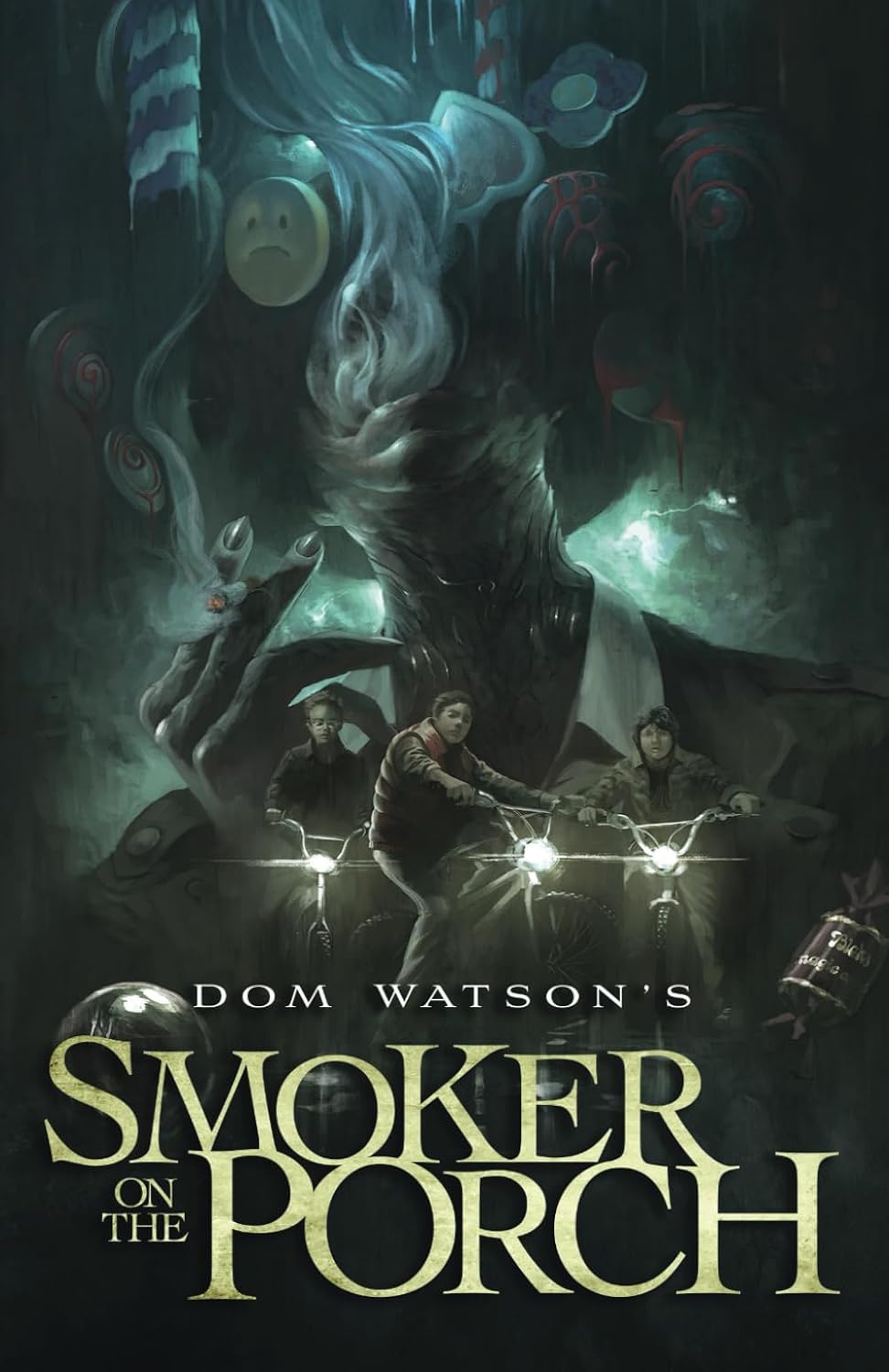
SMOKER ON THE PORCH is an adult horror, set in Suffolk, England in 1989. In the early going, the world-building mostly revolves around establishing a suburban feel for the ‘tween characters, and Watson quickly creates an atmosphere for the story that resembles Stranger Things or the Nightmare on Elm Street movies. But Watson patiently builds onto this an entire series of parallel dimensions or dreamscapes in which the story plays out. The detail conveyed of these alternative settings is fascinating and otherworldly and enhances the growing ominous feel and scope of the tale.

The opening establishes the ordinary world of our primary protagonist, Jake Whittaker. As I say, the setting evokes the horror movies of the book’s timeframe (late 80s) in a wonderfully nostalgic way. We are swiftly and efficiently introduced to all of the major players in the tale, and the stakes—literally life and death—are delivered early and often. No matter how one defines an inciting incident, we are quickly propelled into the story.

The character work focuses primarily on Jake, his family, his close friends, and—of course—the villain: the incredibly creepy Mr. Biggot. We get to know Jake intimately, but because of the tightness of the perspective, I felt a bit of distance to the other players.

The plot revolves around neighborhood children dying in their sleep, and then Jake’s ongoing suspicions—and the confirmation of them—that Biggot is behind them. Thematically, Watson delves the value of family and friendship, the lure of temptation, and memory as it relates to the concept of self. Indeed, the entire tale explores the concept of identity.

The prose is accessible and Jake feels authentic to both his age and the era of the setting (1989) throughout—no small feat. Jake has a world-weariness and cynicism that might be unusual for his age, but the narrative voice seems to be that of an older version of Jake telling the tale in hindsight. As I said, the first-person perspective is quite tight, utterly focused on Jake, which became a boon or a curse, depending on the circumstance as the story progressed.  

The climatic scenes are epic and cinematic. In regard to my satisfaction with the resolution, I need to preface my commentary with the fact that I am not a horror fan. Indeed, I have rarely read the genre. I didn’t connection well with the characters, which I am sure is due to the distance I feel in regard to the genre as a whole. For me, the action sequences felt a tad bit redundant. Having said that, even as a novice, I found the scale of the story impressive and the elements utilized to be creative. The similarities to the show and movies I mentioned above instill a satisfying familiarity, providing a fine base from which to deliver innovative and unique storytelling.

My score: 6—I would definitely recommend Smoker on the Porch to horror fans; particularly fans of Stranger Things or 80s era horror movies.
SPFBOX Review #5—THE WIND AT OAK HOLLOW, by Melissa Widmaier

I’ve been selected by Philip Chase (aka YouTube’s Dr. Fantasy) to be a member of his judging team for the 10th annual edition of the Self-Published Fantasy Blog-Off, a contest created by author Mark Lawrence. I have been assigned six titles and will be publishing my reviews for the books here, a process that will culminate in the selection of the title I will advance in the competition. Each of the other members of Philip’s team will also be making a selection, and from those Philip will select our team’s finalist later this fall.

To make my selection I will be using a ten point system similar to the one Philp has been using for the contest. The scale looks like this:

1-2 points—A flawed book

3-4 points—A underdeveloped book with promise

5-6 points—A promising book, likely worthy of recommendation

7-8 points—A solid, admirable book that I will definitely recommend

9-10 points—A new favorite, likely worthy of rereading

I will be breaking my thoughts down via the following six categories:

*World-building

*Opening/Engagement

*Characters

*Plot/Theme

*Prose

*Satisfaction of Resolution/Story arc

I will strive to keep all of my SPFBO reviews non-spoiler.

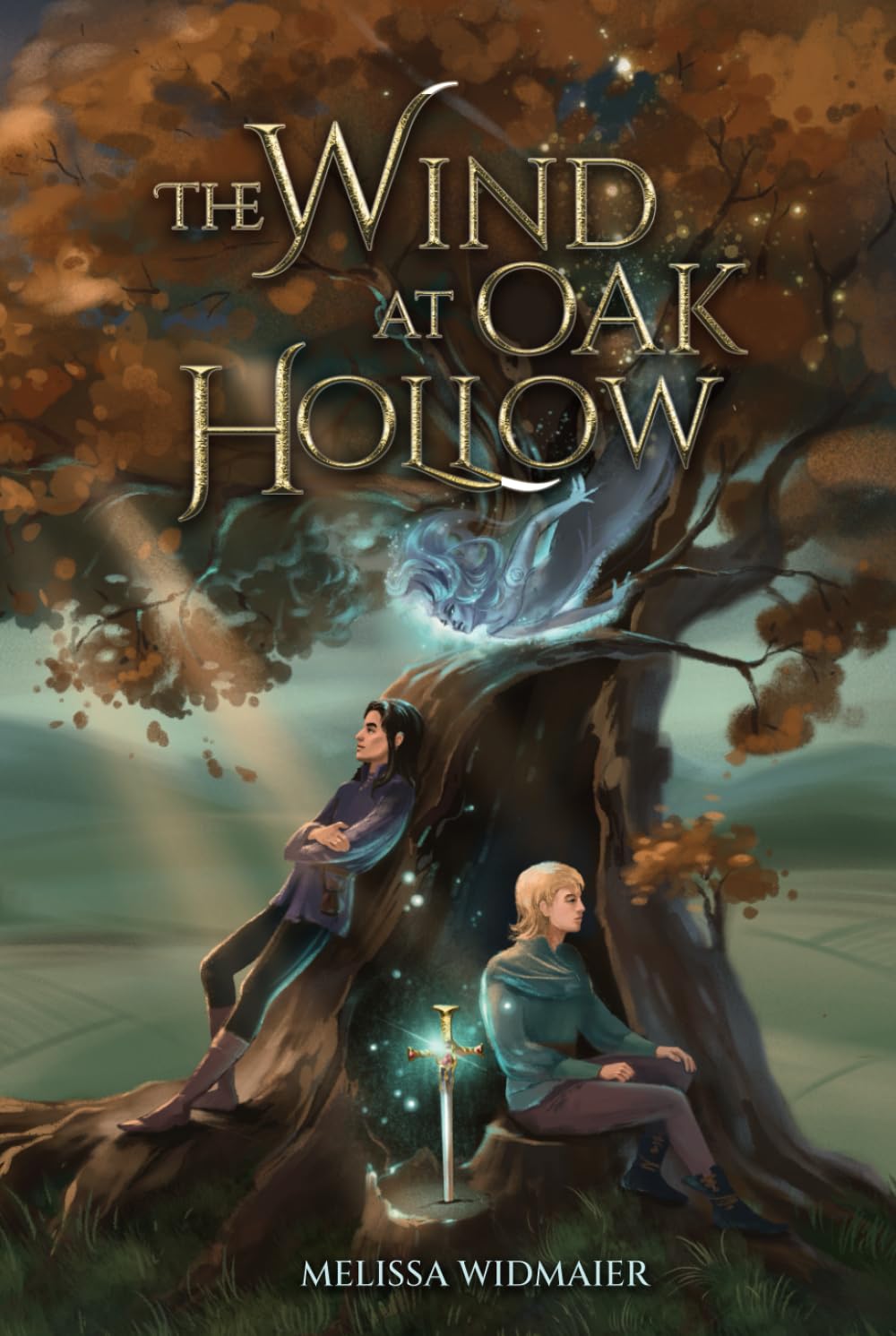
THE WIND AT OAK HOLLOW is listed as an adult “dark fantasy,” and I wouldn’t have suspected the “dark” part that tag was correct until I got to the final 10% of the book. The world-building has a very rural/pastoral feel to it. The world has a mediaeval economy. The primary religion is polytheistic worship of elemental deities, who become characters in the novel—chief among them, the deity Wind, who takes a keen interest in the primary protagonist. The setting conveys an atmosphere that is fairly cozy and inviting.

The opening drew me in quickly, and swiftly familiarized me with the primary characters and their relationships. However, it took time for the stakes to be revealed. Still, I remained curious about the characters’ circumstances and outlooks.

The featured characters are Marl, who is a Chosen One—known as The Wanderer—and his family. We get to know these characters quite well, and I would say that character development is a strength of this story. The supporting cast is broad and diverse, and naturally secondary characters are less well-developed. With the primary players, we are offered quite a bit of interiority.

The plot is fairly flexible, revolving around Marl’s changing goals and motivations as they pertain to his relationships with his family and a romantic interest. Thematically, the book leans into family dynamics and oneness with the natural world. There is also a strong theme of community, and our interdependence as humans.

The story is told in third-person, utilizing multiple POVs. The prose is clear, accessible, and competently written. The language choices provide a flavoring that lends a distinctive fable-like feel to the storytelling. At times I felt quite drawn-in by the writing itself—particularly in scenes featuring the elemental deities, or discussions of the soft magic system (I very much enjoy a good soft magic system).In regard to pacing, the story often feels unhurried—what some reviewers refer to as a “slow burn” fantasy—which led to a slight unevenness.

In regard to the resolution, I’ll note that the pace in the final 15 or 20% of the book shifts into another gear. With breakneck speed we witness major event after major event, one piling on top of another and another. This is the section at which I fully grasped the use of “dark fantasy” in the tag. Although I found this final section page-turning and intriguing, unfortunately, the shift in tone felt a little unsettling to me.

My score: 5. The Wind at Oak Hollow is competently written and error-free. Patient readers interested in a fable-like feeling and elemental deities may enjoy this story. For such readers, further editions of the series look promising.

SPFBOX Review #4—The DESERT HEIRESS, by Shoshana Rain

I’ve been selected by Philip Chase (aka YouTube’s Dr. Fantasy) to be a member of his judging team for the 10th annual edition of the Self-Published Fantasy Blog-Off, a contest created by author Mark Lawrence. I have been assigned six titles and will be publishing my reviews for the books here, a process that will culminate in the selection of the title I will advance in the competition. Each of the other members of Philip’s team will also be making a selection, and from those Philip will select our team’s finalist later this fall.

To make my selection I will be using a ten point system similar to the one Philp has been using for the contest. The scale looks like this:

1-2 points—A flawed book

3-4 points—A underdeveloped book with promise

5-6 points—A promising book, likely worthy of recommendation

7-8 points—A solid, admirable book that I will definitely recommend

9-10 points—A new favorite, likely worthy of rereading

I will be breaking my thoughts down via the following six categories:

*World-building

*Opening/Engagement

*Characters

*Plot/Theme

*Prose

*Satisfaction of Resolution/Story arc

I will strive to keep all of my SPFBO reviews non-spoiler.

THE DESERT HEIRESS is an adult alternate-world fantasy with strong romance, organized crime, and thriller elements. In regard to world-building, as the title indicates, the story is set in a desert locale, which strongly influences the plot. The culture portrayed is entangled with a controlled narcotic and it’s legal and illegal trafficking. The politics revolve around “the Company,” which controls the rights to the substance, as well as a group of smugglers and distributors that answer to the protagonist’s family. There is also a strong religious element, in that the protagonist’s family is part of a religious heritage that is repressed and—in many ways—ostracized by society at large. The more predominant religion is rooted in goddess worship. The fairly complex world is introduced naturally (sans info-dumping), and all of the introduced elements are integral to the plot. The setting is indistinctly historical, and includes horses and ships as the modes of transportation, as well as abundant firearm access and use.

The opening scenes introduce us to the major characters, and we immediately gain some appreciation for their roles in society and their interrelationships. I was instantly engaged and barreling along, enjoying the unspooling of the current situation. The inciting incident occurs quite early, and the story continues to expand in very enticing ways.

The characters are well-drawn, beginning with the protagonist—the desert heiress in question—Liseya, the granddaughter of the smuggling ring’s leader. She is challenged by taking the reins of the family business at a time of major change and upheaval. Also in her circle are Filip, Adrian, and Deo, each involved in some capacity in the seamy world of smuggling. There are several layers of antagonism—meaning more than one villain—but there is an excellent one in particular whom I’ll abstain from describing in order to avoid spoilers. All of the primary characters are unique and engaging, and none of the minor characters feel like cutouts or throw-aways. The characterization, I felt, was one of the novel’s strongest attributes.

The plot involves the shockwaves that naturally occur with generational change in a power structure. It felt very natural as it unfolded—mostly centered on the narcotics trade, and the political and social issues that stem from such a major enterprise. Many themes arise over the course of the story, including the cost of using performance-enhancing substances. Also there is family loyalty—more specifically the expectations and burdens of generational legacy; the cost of an outlaw life; the conflicts inherent in seeking or holding power, including a struggle with the misogyny; and—last but far from least—segregation and the “othering” of a major segment of society rooted in ethnocentricity and prejudice.

[A note about the depiction of sex: This book is very steamy, and the plot involves not just a love triangle but a love quadrangle. The sexual issues are very much entwined with the plot—indeed, sexual tension is integral to the story. The scenes are quite explicit, and though I was not offended, I’m sure there are those who would be. The scenes in question are well-crafted, including one particular sex scene which I would describe as being both provocative and discomfiting at once, which I’m certain was Rain’s intention. I’ll also note that there are trigger warnings in the opening pages.]

The prose is accessible and the terminology and names introduced are never confusing. In regard to language, there are almost no archaisms used, and often the dialog felt quite modern, which I did not find detracting. Indeed, the writing enhanced the briskness of the pace; the action and sex sequences were clear and easily followed. Speaking of which, the build to the climax centers around major action sequences interspersed with major sexual encounters. There is a relentlessness to the juxtaposition of the two that slightly interfered with my immersion. Also, the action has a strong firearm predilection that is not to my taste.

The resolution felt earned, and the character arcs all felt complete—in particular the arc of Liseya. The resolution to the romantic aspect of the story is sure to engender satisfaction for target audience for this book in particular.

My score: 7—I would recommend this to adult “romantasy” fans, in particular those who enjoy thriller or crime-family story elements. It’s fast-paced, fun, and is among the spiciest books I have encountered in recent years.

SPFBOX #3 Review—SOUTH BREAKS, by Hannah Steenbock

I’ve been selected by Philip Chase (aka YouTube’s Dr. Fantasy) to be a member of his judging team for the 10th annual edition of the Self-Published Fantasy Blog-Off, a contest created by author Mark Lawrence. I have been assigned six titles and will be publishing my reviews for the books here, a process that will culminate in the selection of the title I will advance in the competition. Each of the other members of Philip’s team will also be making a selection, and from those Philip will select our team’s finalist later this fall.

To make my selection I will be using a ten point system similar to the one Philp has been using for the contest. The scale looks like this:

1-2 points—A flawed book

3-4 points—A underdeveloped book with promise

5-6 points—A promising book, likely worthy of recommendation

7-8 points—A solid, admirable book that I will definitely recommend

9-10 points—A new favorite, likely worthy of rereading

I will be breaking my thoughts down via the following six categories:

*World-building

*Opening/Engagement

*Characters

*Plot/Theme

*Prose

*Satisfaction of Resolution/Story arc

I will strive to keep all of my SPFBO reviews non-spoiler.

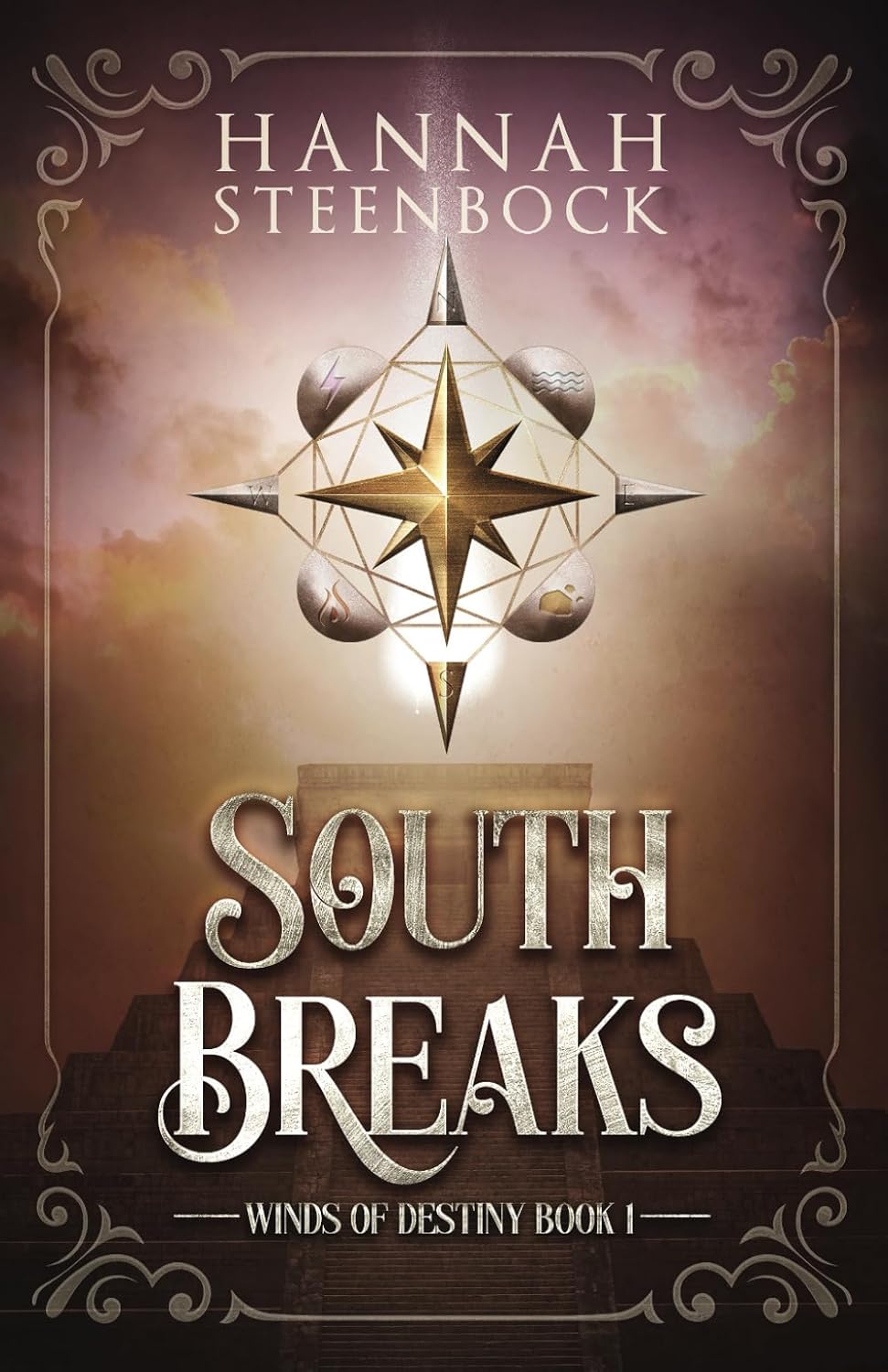
SOUTH BREAKS opens in the midst of action, seamlessly setting up story questions for the reader and building the world of the story without pause. We quickly learn that protagonist South is a “sacrifice” in an ancient, indigenous Mesoamerican  culture that practices human sacrifice on a series of pyramids. Steenbock never stops the story to explain, but large quantities of vital information, about the religion, the culture, and the politics of the story’s Empire are flowing to the reader through a brisk, page-turning opening. I found the invitation to immersion to be exceptional, with intrigue that only continued to build. I quickly read a quarter of the book in one sitting.

The story is primarily told from the perspective of South, whom we come to know intimately in short order. I was almost instantly fond of her, mainly due to her huge heart and her empathy for others, including several animal companions. A few of the other characters are well-developed, including her brother, aunt, mother, and love interest. Perhaps my favorite of all are the aforementioned animal friends… This story has heroic mules! There is also a clever monkey friend, who never accepts any of the names South tries to give them.

The plot centers on a wonderful sort of “found family”—a lost orphan’s return to an unknown home. Which really drew me in and won my heart. From the establishing of our fellowship we are taken on a mission to thwart the treachery of the vengeful “Priests.” The plot culminates in exciting action and perilous flight.

South discovers and uses a soft sort of magic that I really enjoyed, as it has limitations and a cost—including the ultimate penalty for its misuse: death. Several themes develop, including the healing power of love (and sex—more on that in a moment), and of sacrifice (ironically), the nature of grief, the pernicious tendency of religious manipulation, and the acceptance of mortality, especially in the light of love and family.

[Note on the depiction of sex: SOUTH BREAKS is an adult fantasy, and is very spicy. Sex is depicted fairly explicitly. Although, in my opinion, the sex is not gratuitous—indeed, it is quite central to the plot and to the characters’ turning points—I’m guessing some will find it offensive. There is one particular instance I initially found jarring, in which sex is used as a tool of manipulation, and ultimately as a weapon. Upon reflection, considering the cultural and moral context of the story as portrayed, I can’t claim it unfitting to the tale. Although I found this moment challenging, it did not impede my satisfaction with the story.]

The prose of the book is engaging and flows well. The author uses a lot of short sentences, paragraphs, and chapters, enhancing the briskness of the read. The archaicism which Steenbock employed felt complimentary to the atmosphere and the culture, and aided in my immersion.

The climax of the book is exciting and briskly paced, and leads to a denouement that affirms the thematic threads of the story. Although the book is clearly the first edition in a series, the primary characters’ arcs are complete and satisfying—particularly in the case of South. The final lines of the book are devoted to the setup of an engaging mystery that has this reader anxious to read on.

My score: 8—I would definitely recommend this book to adult readers, particularly those who enjoy spicy fantasy, and/or those interested in ancient Mesoamerican culture.

SPFBOX Review #2—THE VERMILION RIBBON, by Hayley Price

I’ve been selected by Philip Chase (aka YouTube’s Dr. Fantasy) to be a member of his judging team for the 10th annual edition of the Self-Published Fantasy Blog-Off, a contest created by author Mark Lawrence. I have been assigned six titles and will be publishing my reviews for the books here, a process that will culminate in the selection of the title I will advance in the competition. Each of the other members of Philip’s team will also be making a selection, and from those Philip will select our team’s finalist later this fall.

To make my selection I will be using a ten point system similar to the one Philp has been using for the contest. The scale looks like this:

1-2 points—A flawed book

3-4 points—A underdeveloped book with promise

5-6 points—A promising book, likely worthy of recommendation

7-8 points—A solid, admirable book that I will definitely recommend

9-10 points—A new favorite, likely worthy of rereading

I will be breaking my thoughts down via the following six categories:

*World-building

*Opening/Engagement

*Characters

*Plot/Theme

*Prose

*Satisfaction of Resolution/Story arc

I will strive to keep all of my SPFBO reviews non-spoiler.

THE VERMILION RIBBON is a thriller, a romance, and an alt-world historical fantasy all in one. The primary genre-defining element is an assassin story, but it is also a spicy sapphic romance. Both aspects of the story sparkle with vibrancy. The story’s world-building revolves around life in the vast realm of Dur, within which the characters travel to several locales, by boat, on foot and horseback. There are several bustling city settings as well as rural, pastoral settings. This is a low-magic fantasy, focused on character development. The most prominent cultural factor explored is the Guild—an elite and secretive society of deadly assassins.

The story opens from the perspective of Corelle, a young but gifted fashion designer, who falls for the beautiful Arelle, and the two embark upon a passionate but forbidden affair. The pace is brisk from the onset, never getting too bogged down with issues beyond that which propels the plotline. In the name of love, Corelle swiftly becomes embroiled in a seamy and dangerous world that propels her into a tangled web.

Besides Corelle and Arelle, we are introduced to several other characters, including Deineike, who also becomes central to the plot, and Styrrach, the villainous leader of the Guild. All of the characters are well-developed, their outer motives clear, and their interior goals and desires on full display. Corelle in particular is complex and multi-faceted; her descent from innocence to ruthlessness is understandable. We feel for her throughout her very dramatic and very complete arc.

The plot is meaty and too complex to easily summarize, but the overarching action revolves around Corelle’s descent into the world of the Guild. The multitiered love stories greatly enhance what I would ultimately describe as a “life-on-the-run” thriller. The themes also enhanced my enjoyment, and include love and betrayal, the weight of guilt, the cost of secrecy and lies, losing and regaining trust, forgiveness, and the power of love to reunite and heal.

The prose is competent and accessible. Price utilizes archaicism sparingly and consistently, aiding in the transportive feel of the storytelling. The narrative perspective has a bit of distance that served the pacing well. A few segments of the tale felt unhurried, but not in a way that detracted from the momentum.

In contrast, the pacing of the climax is fast and furious—very exciting to read. I did, however, feel a bit tricked by an instance of sleight-of-hand in the resolution. Having said that, I was indeed surprised. In regard to satisfaction, I found the character arcs of our primary protagonists to be powerful and heartwarming.

My score: 7—A solid book that I would definitely recommend to fans of sapphic romance and/or thriller elements in their historical fantasy.

SPFBOX Review #1: FLIGHT OF AN ORPHAN THIEF, by S.M. Radjy

I’ve been selected by Philip Chase (aka YouTube’s Dr. Fantasy) to be a member of his judging team for the 10th annual edition of the Self-Published Fantasy Blog-Off, a contest created by author Mark Lawrence. I have been assigned six titles and will be publishing my reviews for the books here, a process that will culminate in the selection of the title I will advance in the competition. Each of the other members of Philip’s team will also be making a selection, and from those Philip will select our team’s finalist later this fall.

To make my selection I will be using a ten point system similar to the one Philp has been using for the contest. The scale looks like this:

1-2 points—A flawed book

3-4 points—A underdeveloped book with promise

5-6 points—A promising book, likely worthy of recommendation

7-8 points—A solid, admirable book that I will definitely recommend

9-10 points—A new favorite, likely worthy of rereading

I will be breaking my thoughts down via the following six categories:

*World-building

*Opening/Engagement

*Characters

*Plot/Theme

*Prose

*Satisfaction of Resolution/Story arc

I will strive to keep all of my SPFBO reviews non-spoiler.

FLIGHT OF AN ORPHAN THIEF is a YA fantasy delivered in third-person perspective, past tense. The world-building is conveyed without resorting to info-dumping, which I always appreciate. The setting is a vaguely mediaeval village that feels European. The economy quickly becomes a key element, and seems similar to the Italian city-states of the Renaissance period, with wealthy “Houses” competing for trade dominance within the primary port city setting, called Thapis.

The city has taverns (of course), and one of them provides a base of operation for a guild of thieves. Little is relayed of the religion which resembles European Christianity. Radjy incorporates horses beautifully, as she does books and the love of reading. The countryside surrounding Thapis feels bucolic. Martial training is well-portrayed and integral to the plot.

The opening introduces us to Ayla, a 16 year old orphan who is homeless, living on the streets of Thapis. The reader gains a feel for the harsh life she lives. Radjy swiftly establishes empathy, sowing the seeds of fondness for Ayla. The story questions grow intriguing when a rival sets Ayla up, and she is taken to jail. Another character is introduced to come to her rescue in the form of a lawman with a heart.

Ayla gains an opportunity for employment as a kitchen worker in one of the aforementioned wealthy “Houses.” Here Ayla gains the chance to make a life for herself. While the opening is fairly conventional, the stakes and intrigue keep the pages turning.  

There is a fairly small cast of characters with names that are unique and yet easy to remember. The fairly tight third-person POV is mostly from protagonist Ayla’s viewpoint, with some minor exceptions. While Ayla is a solidly drawn character, for whom I did grow fond and happy cheer on, the other characters are a bit less well-developed. There is a fellow orphan, Drom, whose role fades from visibility during much of this edition to the tale. Master Hammond, of the House, is well-portrayed. The rival, Marna, also fades from view, perhaps temporarily (I’m guessing she and Drom will reappear in future editions). Once Ayla grows into her new role in the House of Hammond, a fellow worker is introduced in the form of Ro. Ayla remains suspicious of Ro in spite of their growing closeness, inspiring some reader trepidation.

The plot is straightforward and yet enticing. There are solid moments of drama sprinkled throughout. The culminating rivalry between the Houses eventually dominates the tale, which gives the pace a boost in the final third of the book.

The themes most prominently featured are of seeking identity and longing for a home. Both are well-conveyed and enhanced my enjoyment of the tale.

The prose is accessible—even a non-fantasy reader would have little trouble following along. The language choices occasionally felt a bit modern to me, but not to a level of distraction. There is a dialect used, notably from the partner character, Ro, which sounded to me like Cockney. I believe it was added to convey a difference in the character’s social status.

As I approached the book’s end I worried that no significant resolution was in sight. There is a culminating setting change for the story’s climax, during which came a late surprise and significant twist. Indeed, rather than resolving Ayla’s situation, it greatly complicates it! What is revealed is intriguing and will provide a great lure to fans to read on in the series.

My score: 6—a promising start for the series and this author. I would recommend Flight of an Orphan Thief to YA fans looking for a fairly cozy and page-turning read.