I’ve been selected by Philip Chase (aka YouTube’s Dr. Fantasy) to be a member of his judging team for the 10th annual edition of the Self-Published Fantasy Blog-Off, a contest created by author Mark Lawrence. I have been assigned six titles and will be publishing my reviews for the books here, a process that will culminate in the selection of the title I will advance in the competition. Each of the other members of Philip’s team will also be making a selection, and from those Philip will select our team’s finalist later this fall.
To make my selection I will be using a ten point system similar to the one Philp has been using for the contest. The scale looks like this:
1-2 points—A flawed book
3-4 points—A underdeveloped book with promise
5-6 points—A promising book, likely worthy of recommendation
7-8 points—A solid, admirable book that I will definitely recommend
9-10 points—A new favorite, likely worthy of rereading
I will be breaking my thoughts down via the following six categories:
*World-building
*Opening/Engagement
*Characters
*Plot/Theme
*Prose
*Satisfaction of Resolution/Story arc
I will strive to keep all of my SPFBO reviews non-spoiler.
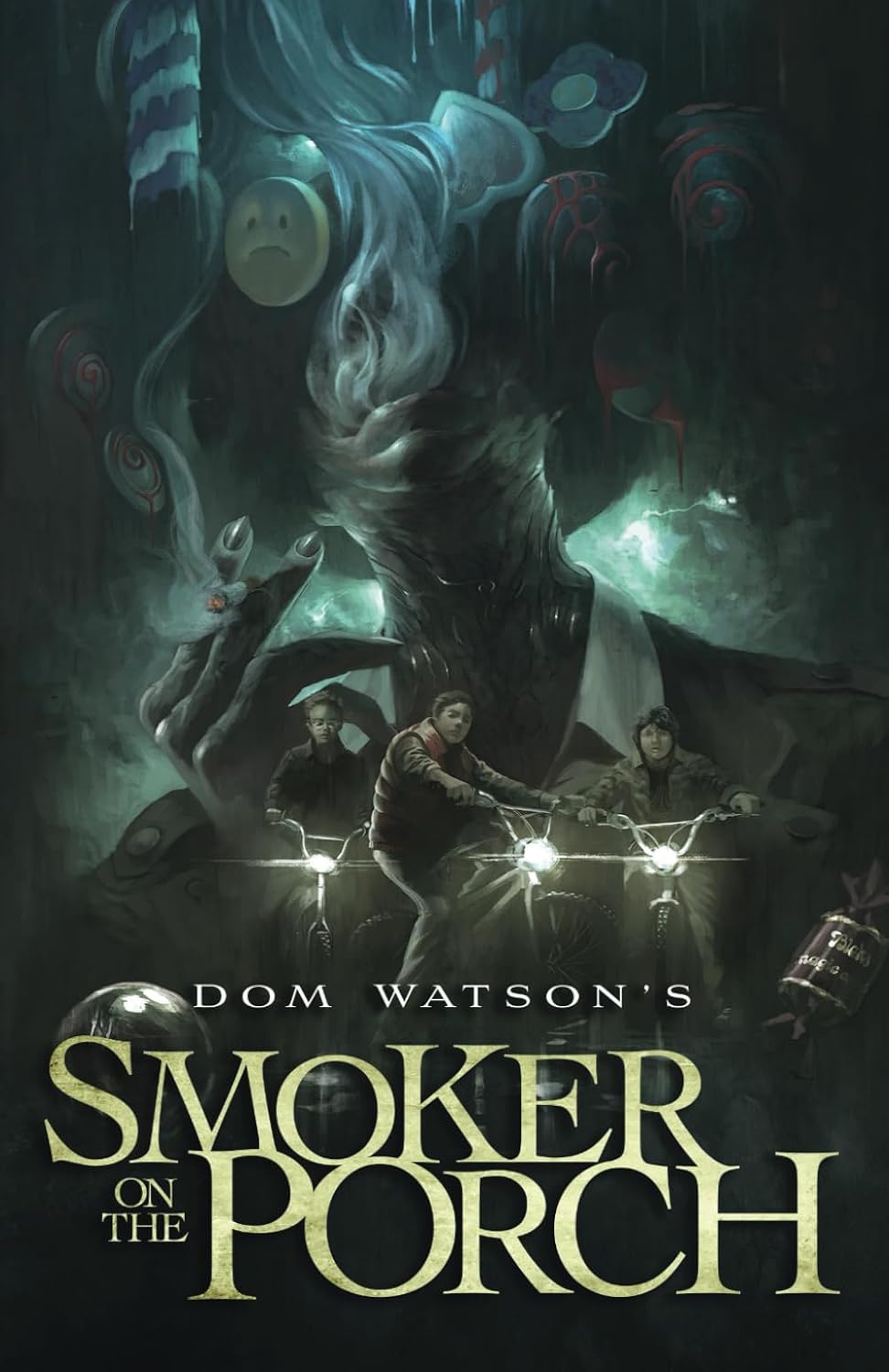
SMOKER ON THE PORCH is an adult horror, set in Suffolk, England in 1989. In the early going, the world-building mostly revolves around establishing a suburban feel for the ‘tween characters, and Watson quickly creates an atmosphere for the story that resembles Stranger Things or the Nightmare on Elm Street movies. But Watson patiently builds onto this an entire series of parallel dimensions or dreamscapes in which the story plays out. The detail conveyed of these alternative settings is fascinating and otherworldly and enhances the growing ominous feel and scope of the tale.
The opening establishes the ordinary world of our primary protagonist, Jake Whittaker. As I say, the setting evokes the horror movies of the book’s timeframe (late 80s) in a wonderfully nostalgic way. We are swiftly and efficiently introduced to all of the major players in the tale, and the stakes—literally life and death—are delivered early and often. No matter how one defines an inciting incident, we are quickly propelled into the story.
The character work focuses primarily on Jake, his family, his close friends, and—of course—the villain: the incredibly creepy Mr. Biggot. We get to know Jake intimately, but because of the tightness of the perspective, I felt a bit of distance to the other players.
The plot revolves around neighborhood children dying in their sleep, and then Jake’s ongoing suspicions—and the confirmation of them—that Biggot is behind them. Thematically, Watson delves the value of family and friendship, the lure of temptation, and memory as it relates to the concept of self. Indeed, the entire tale explores the concept of identity.
The prose is accessible and Jake feels authentic to both his age and the era of the setting (1989) throughout—no small feat. Jake has a world-weariness and cynicism that might be unusual for his age, but the narrative voice seems to be that of an older version of Jake telling the tale in hindsight. As I said, the first-person perspective is quite tight, utterly focused on Jake, which became a boon or a curse, depending on the circumstance as the story progressed.
The climatic scenes are epic and cinematic. In regard to my satisfaction with the resolution, I need to preface my commentary with the fact that I am not a horror fan. Indeed, I have rarely read the genre. I didn’t connection well with the characters, which I am sure is due to the distance I feel in regard to the genre as a whole. For me, the action sequences felt a tad bit redundant. Having said that, even as a novice, I found the scale of the story impressive and the elements utilized to be creative. The similarities to the show and movies I mentioned above instill a satisfying familiarity, providing a fine base from which to deliver innovative and unique storytelling.
My score: 6—I would definitely recommend Smoker on the Porch to horror fans; particularly fans of Stranger Things or 80s era horror movies.




 Vaughn Roycroft's Blog